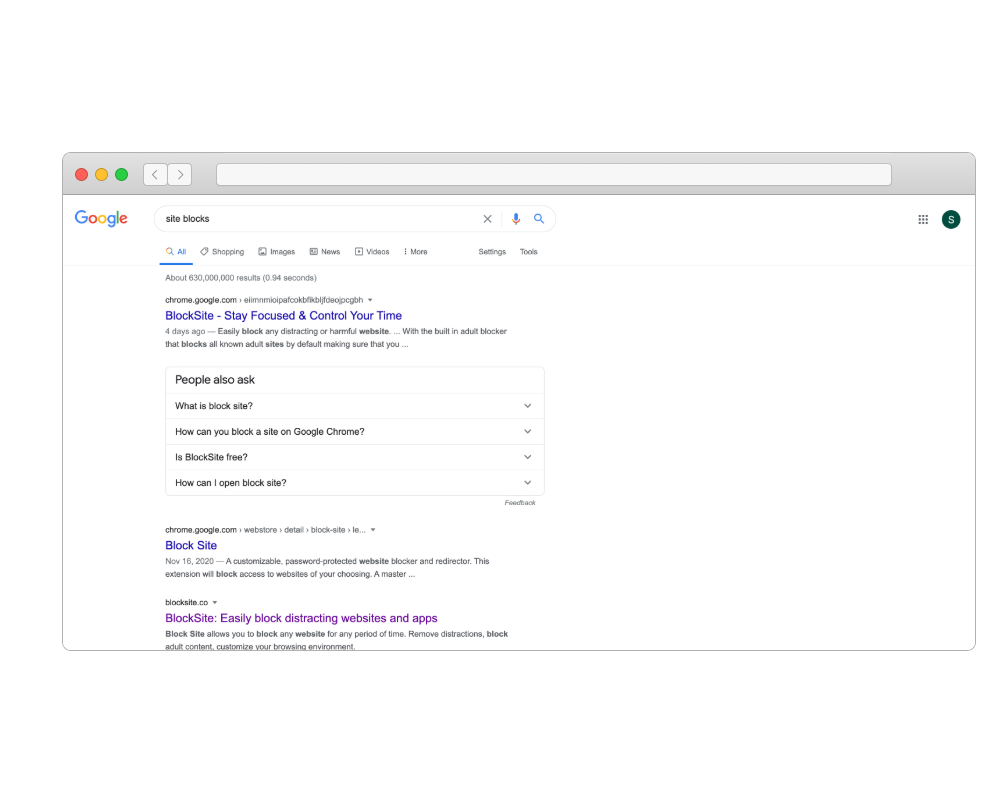

Review of products and services is a very normal thing, especially in the print media. Many writers specialize in reviewing products and services that are of interest to the readers. If it appears online, there are a few things that may affect the site/blog in which it appears. That is when you reference the source, usually another site or sites where you can find such services. Good enough, from the readers’/ visitors’ point of view. But it is not so with search engines, especially Google. Google will say that you are writing for money (well, which journalist or creative writer does not want money?). Google will say that it is unnatural because it will help the referenced site to get a higher page rank (PR) and advises the webmasters to desist from buying and selling links in this way. If you do not listen, you will end up losing your PageRank. Google tells you to use "nofollow" so that it will be just another piece of advertisement or paid review, and not manipulating PR or link popularity. That means per se Google is not against the ads or paid reviews. In other words, persons selling ads, writing for money, including bloggers, are free to sell their services as usual.
Then what is the fuss about PR dropping and paid reviews? The problem is NOT with Google or bloggers. The problem is with the site owners/webmasters who hire your services who are buying links from you. If they are in fact interested in advertising with you or paying you for writing reviews, they should not object to "nofollow". If they object, they are trying to buy link popularity for pushing up their PR unnaturally. Google penalizes the PR of both buyers and sellers of links by lowering PageRank. Google’s search engine crawlers (bots) are programmed to detect such practices. If you want to report buying or selling of links to Google, CLICK the link: https://www.google.com/webmasters/tools/paidlinks?hl=en.
So, if you are not a LINK FARM, use nofollow. Change the code,
<a href="http://www.devilssite4u.com/devil.html/">
to
<a href="http://www.devilssite4u.com/devil.html/" rel="nofollow">.
That’s all to it. It protects you from PR reduction, it allows traffic from the link and it helps Google to give search results on merits of a site. Then, what is the harm in nofollow attribute?
Tags: nofollow attribute, link farm, link popularity, pagerank, report paid links
I have come across many bloggers who woke up on a fine morning to mourn about a sudden drop in their levels of liquid, er.. what’s it? Mercury? No, it is Google PageRank (PR). They have all the reason to mourn, as they are paid for blogging depending on their PR. The higher the PR, the more they earn from blogging. Once they are comfortable with their incomes, there is the sudden bolt from the blue! The PR drop! If PR is "0", buyers of links are the least interested in hiring you! The income = "0". After some time of low income and PR="0", you find it again back to normal. You regain part of the lost steam or juice! Google says, "Help us maintain the quality of Google search results". And Google adds, "Unfortunately, not all websites have users' best interests at heart. Some site owners attempt to "buy PageRank™" in the form of paid links to their sites. Buying links to improve PageRank violates our quality guidelines."
I quote from Google's site, "Google uses a number of methods to detect paid links, including algorithmic techniques. We also welcome information from our users. If you know of a site that buys or sells links, please tell us by filling out the fields below. We'll investigate your submissions, and we'll use your data to improve our algorithmic detection of paid links." Click here to read the original Google stuff.
Have any questions on Google PageRank, or how you can earn from blogging without losing sleep or PR? Post your questions and I will reply them, of course quoting Google and other well-learned professionals.
CLICK ON THE PHOTO TO VIEW FULL SIZE
The United States has asked India, along with other nations, to use its influence on Myanmar to secure entry of the assistance teams into the cyclone-ravaged country. As many as 80,000 people had died in the deadly cyclone Nargis which had hit Myanmar last week, according to Myanmar officials.
US State Department Spokesman Sean McCormack said, "We have the US ambassador for ASEAN, Scot Marciel, in the region. And he is working the issue. We have also been in contact with China, Japan and India about their using whatever leverage and influence they might have with the Burmese regime". His remarks came in the backdrop of US first lady Laura Bush's recent remarks that India could help Yangon in a much better way than the United States.
Speaking at a news conference two days ago, Laura Bush had said, "I think India can help. India is close on the border there. I think there are a lot of ways they could help and get help there quickly, and maybe the Burmese government would accept it more readily from the Indian government than they do from the US government".
Source: various agencies on Thu, May 8, 2008.
Agencies report that the military junta's visa restrictions were hampering international relief efforts. Only a few U.N. aid workers had been let into the country, which the government has kept isolated for five decades.
A spokesman for the U.N. Children's Fund said its staff in Myanmar reported seeing many people huddled in rude shelters and children who had lost their parents. There's widespread devastation. Buildings and health centers are flattened and bloated dead animals are floating around, which is an alarm for spreading disease.
Myanmar's state media said Cyclone Nargis killed at least 22,980 people and left 42,119 missing. American diplomat Shari Villarosa, who heads the U.S. Embassy in Yangon, said the number of dead could eventually exceed 100,000 because safe food and water were scarce and unsanitary conditions widespread.
A few shops reopened in the Irrawaddy delta, but they were quickly overwhelmed by desperate people, said Paul Risley, a spokesman for the U.N. World Food Program in Bangkok, Thailand, quoting his agency's workers in the area. "Fistfights are breaking out," he said. A Yangon resident who returned to the city from the delta area said people were drinking coconut water because there was no safe drinking water. He said many people were on boats using blankets as sails.
U.N. officials estimated some 1 million people had been left homeless in Myanmar, which also is known as Burma. Some aid workers said heavily flooded areas were accessible only by boat, with helicopters unable to find dry spots for landing relief supplies. "Basically the entire lower delta region is under water," said Richard Horsey, the Thailand-based spokesman for the U.N. Office for the Coordination of Humanitarian Aid. "Teams are talking about bodies floating around in the water," he said. This is "a major, major disaster we're dealing with."
International assistance began trickling in Wednesday with the first shipments of medicine, clothing and food. But the junta, which normally restricts access by foreign officials and groups, was slow to give permission for workers to enter. U.N. Secretary-General Ban Ki-moon urged the junta to speed the arrival of aid workers and relief supplies "in every way possible."
State television said Myanmar would accept aid from any country. It also said planes flew in Wednesday with tents from Japan, medicine and clothing from Bangladesh and India, packets of noodles from Thailand and dried bacon from China. The first U.N. flights, carrying 45 metric tons of high energy biscuits, were due to arrive early Thursday.
President Bush said the U.S. was ready to deliver aid and was prepared to use Navy ships and aircraft to help search for the dead and missing. But it wasn't known if the junta, which regularly accuses Washington of trying to subvert its rule, would accept an American military operation in its territory.
In Yangon, many angry residents complained that the military regime had given vague and incorrect information about the approaching storm and provided no instructions on how to cope when it struck. Officials in India said they had warned Myanmar about the cyclone two days before it roared into the low-lying Irrawaddy delta. B.P. Yadav, spokesman for the Indian Meteorological Department, said the agency spotted the developing storm on April 28 and gave regular updates to all countries in its path.
But residents of Yangon faced doubled prices for rice, charcoal, bottled water and cooking oil. At a suburban market, a fishmonger shouted to shoppers: "Come, come the fish is very fresh." But an angry woman snapped: "Even if the fish is fresh, I have no water to cook it!" Most residents of Yangon rely on wells with electric pumps for water, and power had been restored to only a small part of the city.
(Inputs from Associated Press writers Carley Petesch and Lily Hindy in New York)
A resident sits next to a fallen tree following devastating Cyclone Nargis, Tuesday, May 6, 2008, in Yangon. Myanmar announced Tuesday it is delaying a crucial constitutional referendum in areas badly hit by a cyclone that killed more than 22,500 people and may have left as many as a million homeless. Officials feared the death toll could soar higher.

A resident walks past a tree fallen by a devastating Cyclone Nargis on Tuesday, May 6, 2008, in Yangon, Myanmar.

A map showing areas worst-hit by Tropical Cyclone Nargis. More than 22,500 people were killed in Myanmar's devastating cyclone and 41,000 are still missing four days after the storm slammed into the country's southern coast, the Government said on Tuesday.